
Thailand and Türkiye Unite Nine Organizations to Strengthen Disaster Resilience in Southern Thailand: From International Cooperation to Community Empowerment
“From reactive to proactive approaches, from disaster victims to active agents of disaster risk management.”
The National Health Commission Office (NHCO), together with Thai and Turkish partners, announced a joint commitment to strengthening the capacity of communities across eight southern provinces of Thailand. The initiative translates the Cabinet resolution into concrete action, focusing on disaster prevention, risk reduction, preparedness, and sustainable disaster risk management.
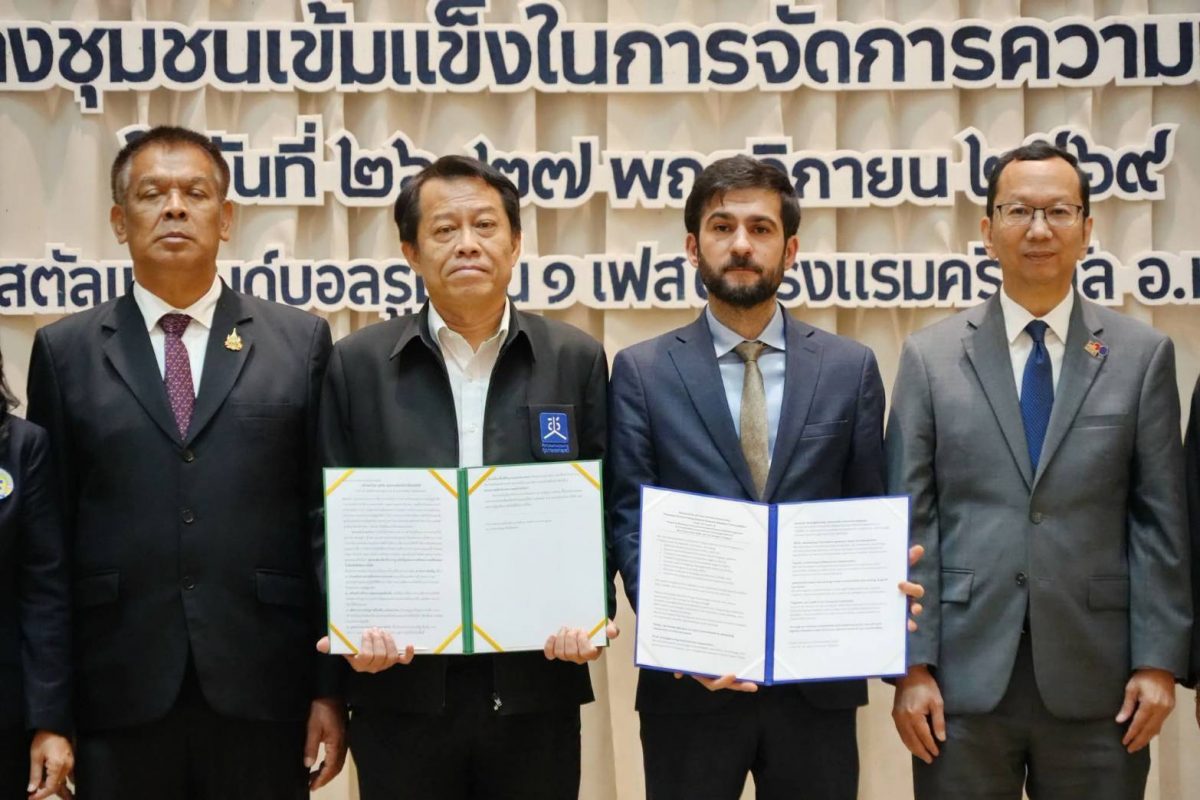
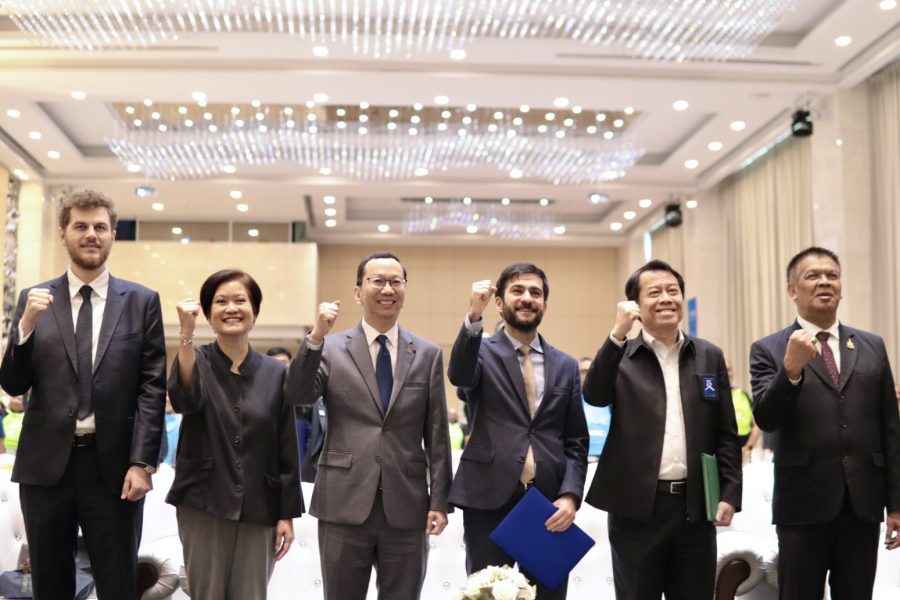
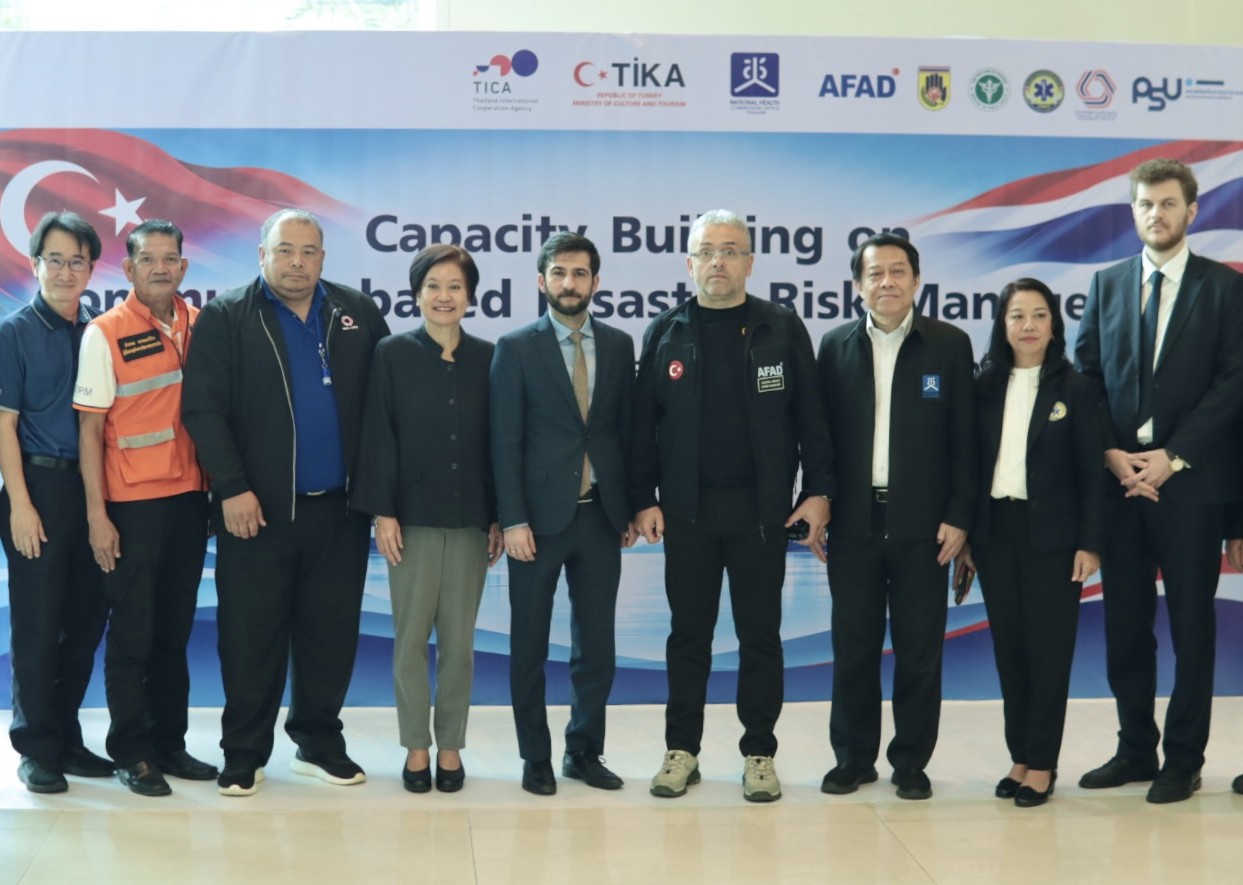
🗓 On 26 November 2026, at the Crystal Grand Ballroom, Crystal Hotel, Hat Yai, Songkhla Province, NHCO, in collaboration with partner organizations from Thailand and the Republic of Türkiye, organized the “Thailand–Türkiye Partnership for Disaster-Resilient Communities” Kick-off Event, held on 26–27 November 2026.
The event was officially opened by Mr. Chulavat Narintharangura, Director-General of the Thailand International Cooperation Agency (TICA), with welcoming remarks delivered by Mr. Jirawat Maneechote, Deputy Governor of Songkhla Province. The event brought together representatives from government agencies, academic institutions, local authorities, civil society organizations, and community networks from both countries.
This collaboration was initiated by the National Health Commission Office (NHCO) and the Turkish Cooperation and Coordination Agency (TİKA) under the project “Capacity Building on Community-based Disaster Risk Management (CBDRM) for Communities and Local Authority Organizations.” The project forms part of the Memorandum of Understanding on Development Cooperation between the Thailand International Cooperation Agency (TICA), Ministry of Foreign Affairs of Thailand, and TİKA.
The project aims to strengthen the capacity of communities and local authorities in community-based disaster risk management by developing essential knowledge, skills, and tools, as well as supporting the development of community-based disaster risk management plans and centers. These efforts will enable communities to prevent, reduce, prepare for, respond to, and recover from disasters in ways that are appropriate to their local contexts.
Disasters Know No Borders: Advancing International Cooperation
Disasters are a shared global challenge, particularly in the context of climate change, which is increasing the severity and complexity of disaster risks. Southern Thailand is particularly vulnerable to floods, landslides, storms, and other natural hazards. Strengthening community and local preparedness is therefore a critical priority that requires collaboration across all sectors.
Mr. Sutthipong Wasusopon, Deputy Secretary-General of the National Health Commission, emphasized the need to shift disaster management approaches from post-disaster assistance and recovery towards proactive prevention, risk reduction, and preparedness. This requires empowering communities and local authorities to manage disaster risks through their own capacities.
The initiative builds upon the Cabinet resolution of 2 December 2025, which endorsed the policy proposal on “Community- and Local-Centered Disaster Management” as a national agenda. It leverages international cooperation to support the translation of national policy into concrete action at the local level.
A Major Milestone: Nine Organizations Declare a Joint Thailand–Türkiye Commitment
A key highlight of the event was the Declaration of Commitment Ceremony, entitled “Thailand–Türkiye Partnership for Disaster-Resilient Communities.” The declaration reflects the shared commitment of both countries to developing disaster risk management systems that place communities and local authorities at the center.
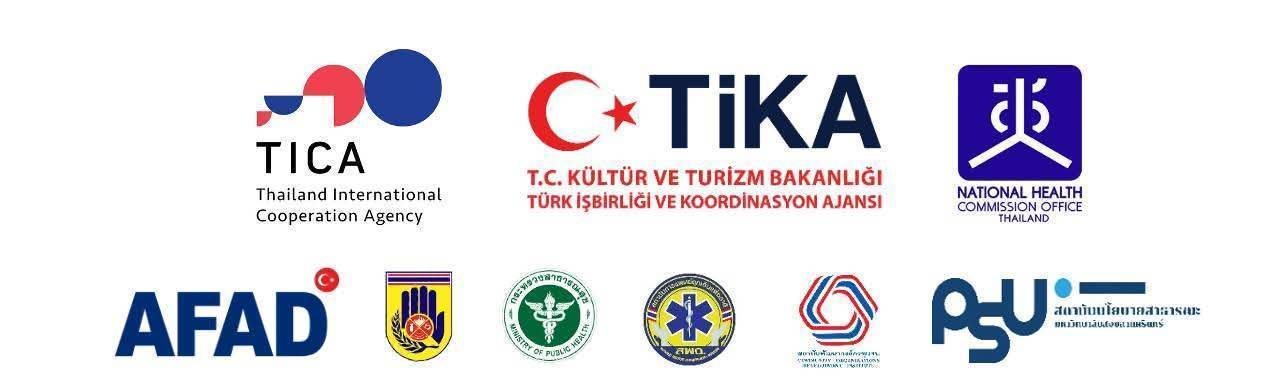
This partnership brings together nine organizations:
- National Health Commission Office (NHCO)
- Department of Disaster Prevention and Mitigation (DDPM)
- Thailand International Cooperation Agency (TICA)
- Turkish Cooperation and Coordination Agency (TİKA)
- Disaster and Emergency Management Authority (AFAD), Republic of Türkiye
- Prince of Songkla University (PSU)
- National Institute for Emergency Medicine (NIEM)
- Community Organizations Development Institute (Public Organization) (CODI)
- Songkhla Provincial Administrative Organization
The partnership focuses on five key areas of cooperation:
- Strengthening international cooperation
Promoting the exchange of knowledge, experiences, technologies, and good practices in disaster risk management between Thailand and Türkiye.
- Building community and local capacity
Developing community-based disaster risk management (CBDRM) systems to empower communities to assess risks, prepare for, respond to, and recover from disasters through their own capacities.
- Developing information systems, tools, and equipment
Supporting disaster risk databases, monitoring and early warning systems, emergency response drills, and life-saving and rescue equipment, with particular attention to ensuring inclusive support for vulnerable populations.
- Promoting multisectoral collaboration
Connecting policies, action plans, knowledge, and resources at national and international levels with community- and local-level implementation.
- Developing model communities and promoting sustainable scale-up
Encouraging the application of knowledge and good practices in target areas, monitoring progress, documenting lessons learned, and expanding cooperation to other communities.
🌎 The Declaration of Commitment represents more than a symbolic expression of solidarity. It marks the beginning of a shared effort to translate international cooperation into tangible and meaningful change at the community level.
From Commitment to Action
The event also featured a handover ceremony of life-saving and rescue equipment to eight target provinces in southern Thailand: Phang Nga, Satun, Phatthalung, Krabi, Yala, Pattani, Nakhon Si Thammarat, and Songkhla.
The equipment will strengthen the preparedness of communities and local authorities to respond to emergencies, reduce disaster risks, and minimize disaster-related losses.
The event also provided opportunities for knowledge and experience sharing with experts from TİKA and AFAD on disaster management, preparedness, search and rescue operations, and community resilience. The Department of Disaster Prevention and Mitigation (DDPM) also presented Thailand’s approaches to disaster management.
This Thailand–Türkiye partnership marks another important step in leveraging international development cooperation to advance public policy implementation and strengthen local capacity.
Ultimately, the partnership seeks to build “communities that understand their risks, have effective plans, established systems, essential tools, and strong networks” — empowering them to manage disaster risks effectively and sustainably.
Translation notes: The English version has been adapted into a professional news article suitable for publication on NHCO’s website, international communication channels, and sharing with TICA, TİKA, AFAD, and other international partners.
I have retained the original facts, structure, and key messages while making the language more natural for international readers. British English has been used throughout.
Before publication, the official English spellings of the three Thai executives’ names and the official English title of the Cabinet-endorsed policy proposal should be confirmed.