
June 5, 2026
NHCO Thailand emphasizes ‘Social Participation as a hearth of Health Sovereignty at WHA 79 Side Event
Writers: Khanitta Saeiew, Sirirat Latlertkarn and Eleanor Anders Bolick, NHCO, Thailand
Photos: https://flic.kr/p/2sdVjgZ and CSN Brazil
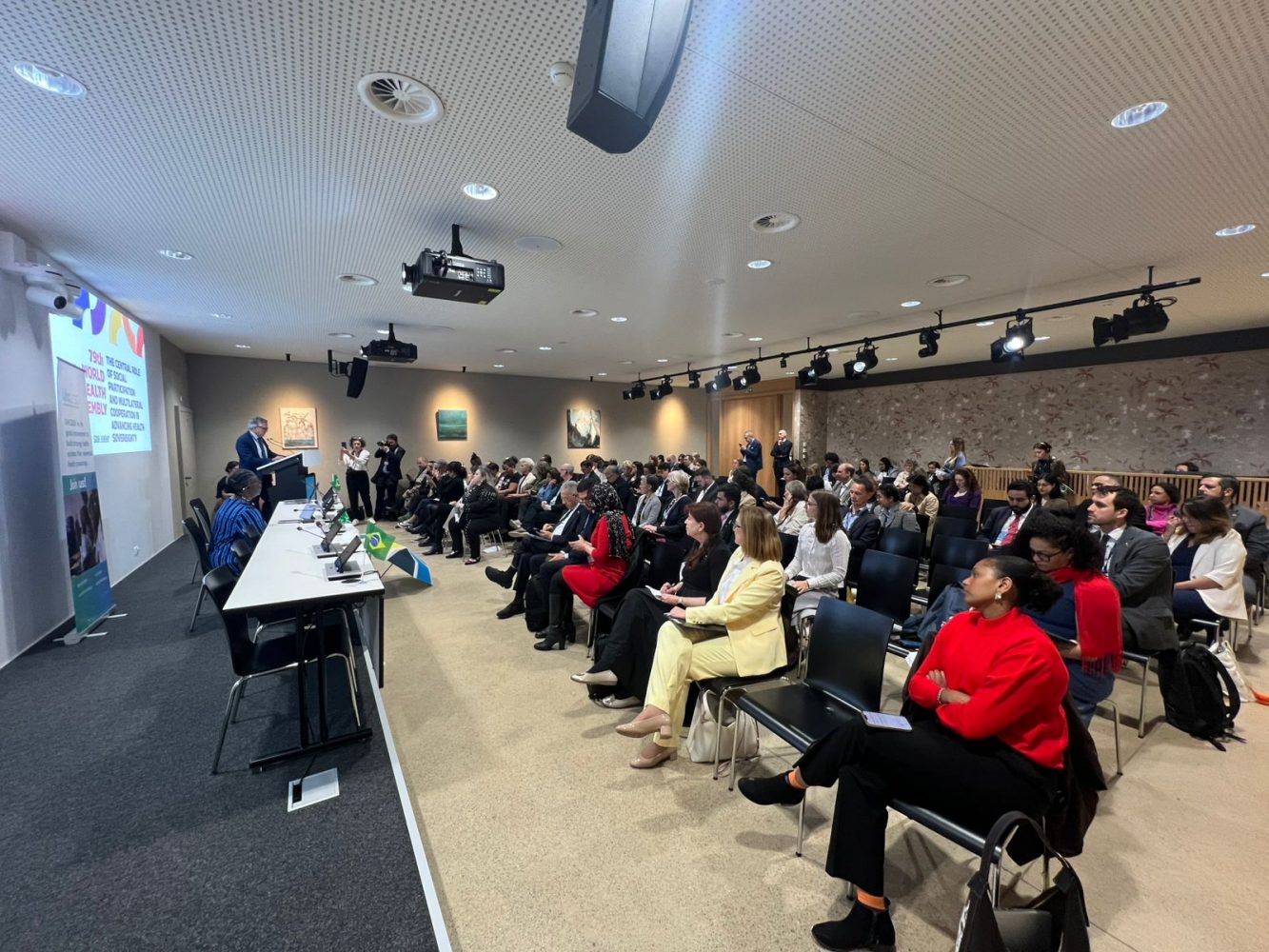
Tuesday 19, May 2026 at World Health Assembly 79 Side Event on the Central Role of Social Participation and Multilateral Cooperation in Advancing Health Sovereignty, Thailand National Health Commission Office (NHCO) in collaboration with the Brazilian National Health Council, Ministry of Health Slovenia, Ministry of Health Tunisia, France, UHC 2030, Civil Society Engagement Mechanism (CSEM) and other important networks organized this side meeting at the Domaine de la Pastorale Auditorium, Geneva, Switzerland.
The side meeting aims to foster political and technical dialogues among governments, civil society, and international organizations on how social participation can strengthen health sovereignty, including through international cooperation, and support the effective implementation of World Health Assembly Resolution on WHA 72.2 on Social Participation for Universal Health Coverage (UHC), Health and Well-being including enhanced incorporation of the demands of populations in vulnerable situations. [1]
The dialogue between social participation in shaping national priorities is discussed by government representatives, including Brazil’s Minister of Health, Alexandre Padilha, Minister of Health of Republic of Tunisia, Mustapha Ferjani, Dr. Kalipso Chalkidou, Director of Health Financing, Delivery of Performance, WHO and other high-level speakers. Including roundtable presenting diverse international experiences related to participatory health governance and health sovereignty.
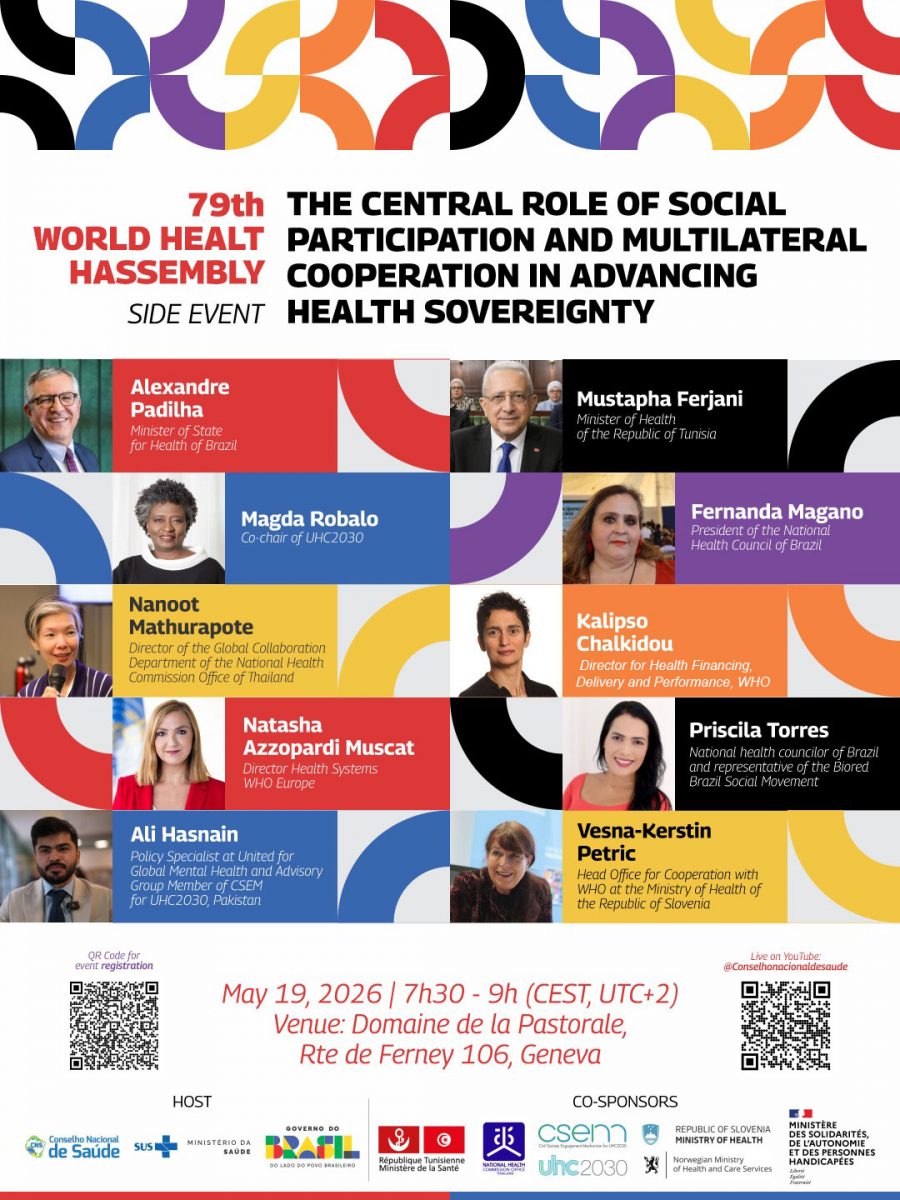
Health sovereignty — understood as the right and capacity of a country to define, implement, and govern its public health policies in accordance with its own priorities, values, and context — has gained prominence in a global landscape marked by pandemics, geopolitical crises, growing interdependencies, and challenges in global health governance and funding. The issue is also at the center of Brazil’s 18th National Health Conference, which is expected to mobilize millions of Brazilians in defining priorities for the country’s universal health system. [2]
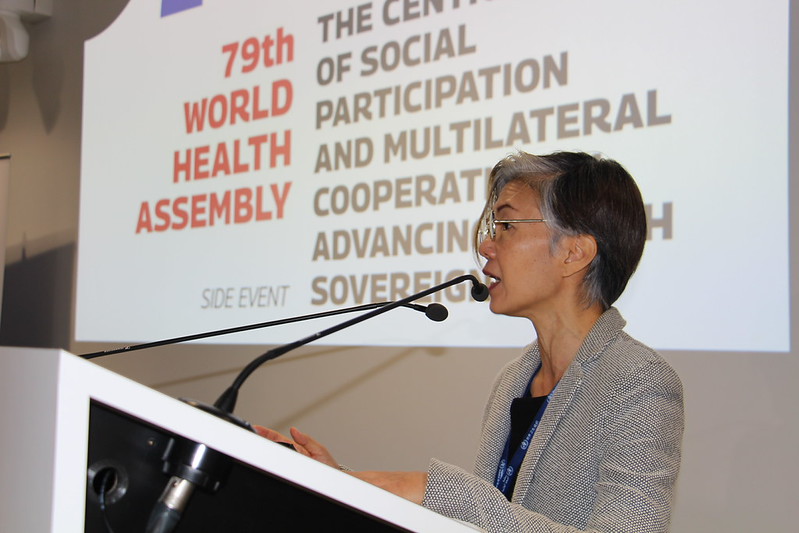
Ms. Nanoot Mathurapote, Director of the Global Collaboration Department of the National Health Commission Office of Thailand emphasized that social participation isn’t only public policy development tool but it is an important approach to strengthen health sovereignty and create trust between people and their governments. She mentioned several social participation mechanisms rooted in Thai society including the Universal Health Coverage (UHC) Scheme’s annual public hearing process, directly to develop benefit packages and National Health Assembly serves as an institutional platform for social participation, enabling stakeholders from government, academia, civil society, and communities to jointly identify health priorities and develop policy recommendations
Emerging Issues from the Session;
-
Social Participation as the Foundation of Health Sovereignty
Health sovereignty cannot be achieved through top-down governance alone. Meaningful participation of communities, civil society, workers, patients, youth, and marginalized groups is essential to ensuring that health priorities and policies reflect people’s needs and realities.
-
Institutionalizing Participation for Accountable Governance
Social participation should be embedded in laws, institutions, and governance mechanisms. Formal and sustainable mechanisms are needed to enable citizens and stakeholders to contribute to policy development, implementation, monitoring, and oversight.
-
Equity and Inclusion in Health Decision-Making
Persistent inequalities continue to limit both access to health services and participation in health governance. Vulnerable and marginalized populations, including those with lived experience, should be recognized as equal partners in decision-making processes.
-
Youth as Partners in Health Sovereignty
Young people are disproportionately affected by health, climate, and social challenges, yet their voices remain underrepresented in policy discussions. Greater investment is needed to ensure meaningful youth engagement as contributors and co-creators of health solutions.
-
Strengthening National Capacity and Building Evidence for Participation
Health sovereignty requires strong national capacities in research, health systems, medicine and vaccine production, and public health policy. At the same time, more evidence is needed to demonstrate the impact of social participation and to support the scaling up of successful participatory governance models.
- To watch the record visit: https://www.youtube.com/live/aNANCA-TEeo?is=vWn2dVRNZhopinEU
- Ref 1: https://csemonline.net/wha79-civil-society-networking-space/
- Ref 2: https://www.gov.br/conselho-nacional-de-saude/pt-br/assuntos/noticias/2026/maio/brazil-brings-social-participation-to-the-center-of-the-global-debate-on-health-sovereignty